Why LinkedIn is already the input layer for AI visibility
AI systems like ChatGPT, Perplexity, and Google AI Mode pull from publicly available content across the web. When generating an answer, they favor sources that are authoritative, specific, and consistently cited elsewhere. They look for entities with a clear topical focus – not just a single good article.
LinkedIn sits at the center of this. A SEMrush analysis of 89,000 LinkedIn URLs cited by ChatGPT Search, Google AI Mode, and Perplexity found that LinkedIn appears in 11% of AI-generated responses overall. The reason isn't LinkedIn's brand name. It's LinkedIn's content structure: public articles, consistent publishing, expert attribution, and clear topical focus. That's exactly what AI systems are looking for.
LinkedIn is a high-authority, publicly indexable platform. When your executives publish specific, expert-led articles there, those articles exist in the pool of content AI systems draw from. (Source: SEMrush, March 2026)
This is why companies with active, structured LinkedIn presences are appearing in AI-generated answers. Not because they ran a GEO campaign. Because they built something specific and consistent in a place AI systems already trust.

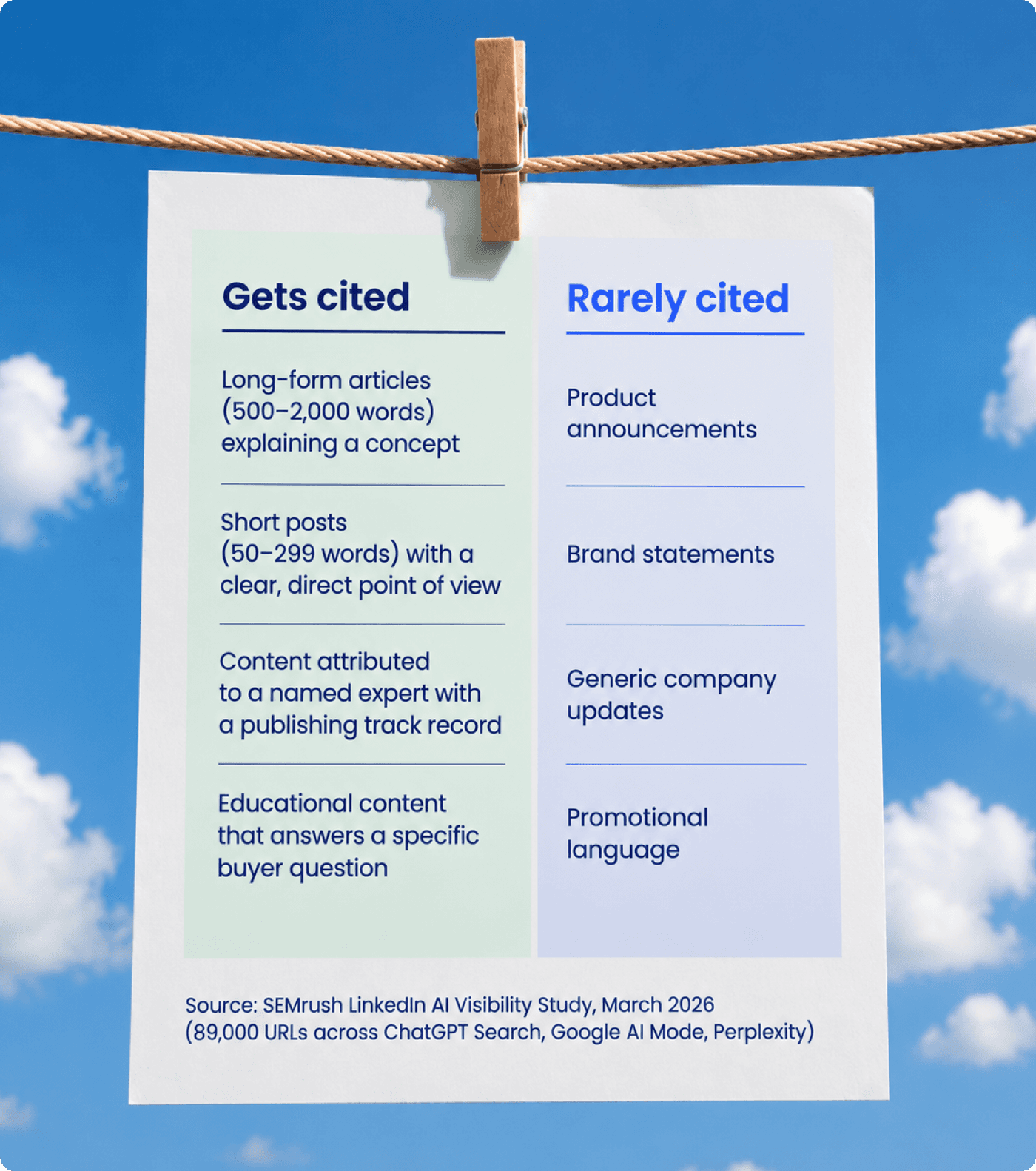
What type of LinkedIn content actually gets cited by AI systems
The same SEMrush study found a clear pattern: educational and advice-driven content accounts for 54% to 64% of all LinkedIn citations in AI responses. Promotional content rarely registers.
Most company LinkedIn strategies are still skewed toward announcements, product updates, and brand statements. That content rarely appears in AI responses — not because AI dislikes your brand, but because it's not providing the specific, educational signal that AI systems weight as authoritative.
How consistency on LinkedIn becomes a citation signal
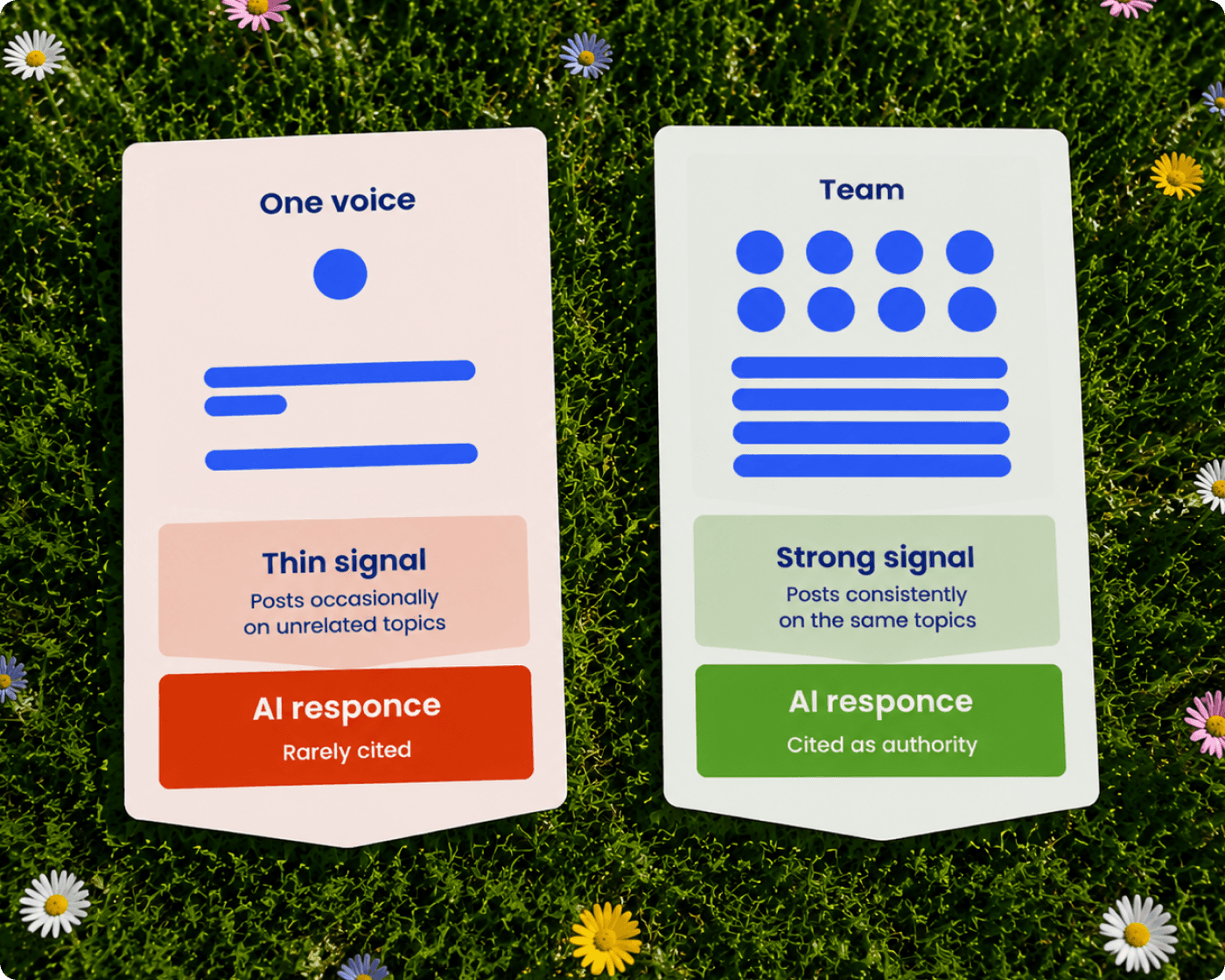
A single well-written LinkedIn article doesn't make a brand citeable. AI systems need to see a pattern: consistent publishing on a specific topic, attribution to real people with demonstrated expertise, and content that gets referenced by others.
One person posting occasionally creates a thin signal. Ten people from the same organization posting consistently on related topics builds a recognizable pattern — because AI systems identify topical authority by consistency across sources, not just the depth of any one.
An OtterlyAI analysis found that 1 in 8 social media AI citations point to LinkedIn — and LinkedIn's monthly AI citation share rose 49.9% from January to May 2026. That share is higher for organizations publishing structured, expert-attributed content consistently across a team.
This is why employee ambassador programs matter more than most companies realize. When multiple people from an organization consistently publish expert-led content on the same topics, the signal stacks. Each article, each post, each third-party mention adds to the pattern AI systems look for when deciding who to cite.
Quick clarity
Does LinkedIn content actually get cited by ChatGPT and Perplexity?
Yes. According to a SEMrush analysis of 89,000 LinkedIn URLs, LinkedIn is the second most cited domain across major AI platforms, appearing in 11% of AI-generated responses. The citation rate is higher for long-form articles, expert-attributed posts, and educational content with clear topical focus.
What type of LinkedIn content gets picked up by AI systems?
Educational and advice-driven content accounts for 54% to 64% of all LinkedIn citations in AI responses. Promotional content – announcements, product updates, brand statements – rarely gets cited. AI systems favor content that clearly explains a concept, solves a problem, or establishes a specific point of view attributed to a named expert.
How many people need to post on LinkedIn to build an AI citation signal?
There's no fixed number, but consistency and topical focus matter more than volume. One person posting occasionally creates a thin signal. Ten people from the same organization posting consistently on related topics builds a recognizable pattern AI systems can identify as topical authority.
Is GEO the same as SEO?
No. SEO focuses on ranking in traditional search results through keywords, backlinks, and technical signals. GEO focuses on whether AI systems can understand, summarize, and cite a brand in generated answers. The two overlap — but GEO requires clearer entity signals, consistent topical authority, and content structured to answer specific buyer questions directly.
Practical takeaway
Look at the last 20 LinkedIn posts published across your team. If someone read only those posts, would they understand clearly what your company does and what it knows best? If the answer is no, you don't have an engagement problem. You have a signal problem — and it's affecting your AI visibility as much as your LinkedIn reach.
We work with B2B companies to build structured, expert-led LinkedIn presences that generate both LinkedIn reach and AI citation signals.